Monday, May 13, 2013
Nissan Frontier 2005 Service Repair Manual
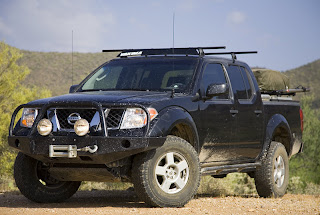 This manual contains maintenance and repair procedures for the 2005 NISSAN FRONTIER model D40 series.
It covers the entire vehicle from start to finish, as used by professional mechanics to service or repair your vehicle. It is based on step by step instruction & highly detailed exploded pictures to show you how to complete the required job correctly & efficiently.
Contains:
GENERAL INFORMATION
General Information
ENGINE
Engine Mechanical
Engine Lubrication System
Engine Cooling System
Engine Control System
Fuel System
Exhaust System
Accelerator Control System
TRANSMISSION/TRANSAXLE
Clutch
Manual Transmission
Automatic Transmission
DRIVELINE/AXLE
Transfer
Propeller Shaft
Front Final Drive
Rear Final Drive
Front Axle
Rear Axle
SUSPENSION
Front Suspension
Rear Suspension
Road Wheels & Tires
BRAKES
Brake System
Parking Brake System
Brake Control System
STEERING
Power Steering System
RESTRAINTS
Seat Belts
Supplemental Restraint System (SRS)
BODY
Body, Lock & Security System
Glasses, Window System & Mirrors
Roof
Exterior & Interior
Instrument Panel
Seat
AIR CONDITIONER
Manual Air Conditioner
ELECTRICAL
Starting & Charging System
Lighting System
Driver Information System
Wiper, Washer & Horn
Body Control System
LAN System
Audio Visual & Telephone System
Auto Cruise Control System
Power Supply, Ground & Circuit Elements
MAINTENANCE
Maintenance
download Nissan Frontier 2005 Service Repair Manual

Friday, April 12, 2013
1999 Audi A6 Sedan Timing Belt Service and Repair Manual
Download: 1999 Audi A6 Sedan Timing Belt Service and Repair Manual
Monday, April 1, 2013
Audi A8 Fuel Line Leak Repair
The 97-99 A8 is prone to two types of fuel leaks, one coming from the high pressure fuel line under the hood, and the other at the gas tank sending unit seal in the trunk. This procedure covers the high pressure fuel line under the hood. It is normally noticed during the cold winter months. The fitting leaks when very cold and fuel leaks out. It creates a smell of fuel in the passenger compartment. Once the fuel line heats up a small amount (such as after the car is turned off in the winter and the engine heat causes it to increase in temperature), it usually seals up.
Disclaimer
Fuel leaks and lines are serious business. This procedure is for a repair of the line versus replacement of the entire fuel line system. The fuel lines (which are all together as a kit) from the dealer is about $800 for the parts. Then it has to be installed from the engine compartment back to the fuel tank. This procedure repairs the leak, costs about $10.00 and takes about an hour.
Audipages.com takes no responsibility for this repair! Use it at your own risk.
Supplies Required
- 17 mm open ended wrench
- 14 mm open ended wrench
- Accetone or equivalent
- 80 grit sandpaper
- Fuel resistant epoxy kit

Supplies required for repair. Make sure that the epoxy kit is fuel resistant.
Procedure
The fuel hose leaks on the high pressure side at one of the fittings. The fuel hoses are sold as one piece from the dealer, which include the supply, return and one other hose attached. It is a one piece kit that runs from the engine to the gas tank.

High pressure fuel line leak location. When it leaks, it just drips out. The fitting breaks down the pressure, so the leak is actually very low pressure.

Fuel line components.
Remove the low pressure fuel line from the fuel regulator. This is required to get proper access to the high pressure line.
Relieve the residual fuel pressure in the fuel line by cracking the high pressure line fittings. This is accomplished by using the 17 and 14 mm wrenches. Place a paper towel under the fuel line to capture the fuel that will drip.

Remove low pressure line, relieve high pressure line fuel pressure.
Remove the high pressure line, and clean with accetone. Using the 80 grit sandpaper, prep the surface by scuffing it with the sandpaper. Scuff the pipe and the fuel line fitting. After scuffing is complete, clean thoroughly with accetone.
Loosely attach the high pressure fuel line. Ensure that the angle on the line is correct for the engine plastic cover and that the low pressure line will not interfere.
Using the epoxy, place it on the fuel line. Perform this step in accordance with the instructions on the epoxy package. Let it cure in accordance with the instructions, preferably overnight. After the epoxy is cured, tighten the high pressure fittings and reinstall the low pressure line. Start the car and ensure there are no leaks. Reinstall engine plastic covers.

Saturday, March 30, 2013
ACURA Service Bulletin Belt Tension Gauge Calibration and Repair

Drive belt tension can be critical to the bearing life of the A/C compressor, alternator, etc. Tension should be checked and adjusted when a new belt is installed, and when a used belt is removed and reinstalled during a repair. For that reason, each Acura dealership is being sent a Belt Tension Gauge Set (T/N 07TGG-001000A). This set contains:
Belt tension gauge (T/N 07JGG-001010A)
Belt tension gauge extension cable
Belt tension gauge checker (T/N 07TGG-001010A)
Plastic pouch and instruction manual
Refer to the appropriate service manual for drive belt tension specifications and procedures.
CALIBRATION
The calibration of the belt tension gauge should be checked regularly. Use the Belt Tension Gauge Checker included in the Gauge Set. If needed, additional checkers may be ordered through normal parts ordering channels. The part number is 07TGG-001010A.
Procedure
1. Push the handle and slide the checker into the gauge. Position the checker as shown.
2. Release the handle and read the tension value on the Kg scale.
3. Compare your reading to the value etched on the checker. Your gauge is in calibration if it is within ±3 kg of the checker value.
Wednesday, March 27, 2013
2002 FORD Explorer Mountaineer Workshop Service Repair Manual
Download: 2002 FORD Explorer/Mountaineer Workshop Service Repair Manual
Saturday, March 23, 2013
BMW 3 5 Series 1983 1991 Service And Repair Manual
in June 1988 by the revised E34 5-Series range, Touring versions of which
became available from March 1992.
Throughout this manual, E28 models are also referred to as “oldshape”, while
E34 models are designated “new-shape”.
The models covered by this manual are equipped with single overhead cam
in-line four- and six-cylinder engines. Early 316 and 518 models are fitted
with carburettors, but all other models are fitted with fuel injection systems. Transmissions are a five-speed manual, or three- or four-speed automatic.
The transmission is mounted to the back of the engine, and power is transmitted
to the fully-independent rear axle through a twopiece propeller shaft. The final drive unit is bolted solidly to a frame crossmember, and drives the rear wheels through driveshafts equipped with inner and outer constant velocity joints.
The front suspension is of MacPherson strut type, with the coil spring/shock
absorber unit making up the upper suspension link. The rear suspension is
made up of coil springover-shock absorber struts, or coil springs and conventional shock absorbers, depending on model.download BMW 3 & 5 Series (1983 1991) Service And Repair Manual